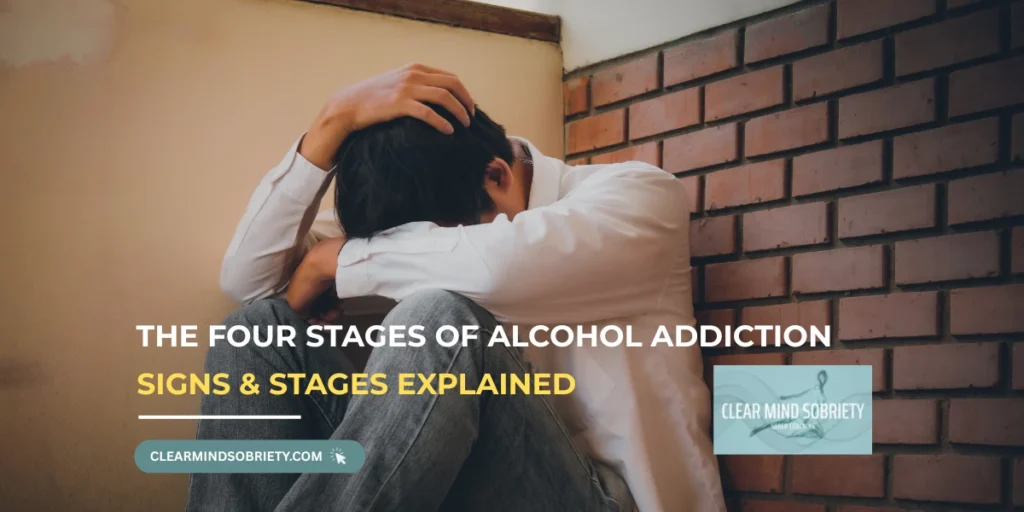
Alcoholism is a progressive condition that often goes unnoticed as it develops over time. Understanding the four stages of alcohol addiction is crucial for spotting early signs and preventing the condition from getting worse. Alcohol use moves from occasional social drinking to severe dependences, affecting both mental and physical health.
Taking action early is vital in reducing the risk of serious health issues like liver disease, digestive problems, and stomach ulcers. In this article, we look at each stage of alcohol
Addiction, showing how dependences develop and stressing the importance of acting quickly for successful recovery.
Stage 1: Pre-Alcoholic Stage
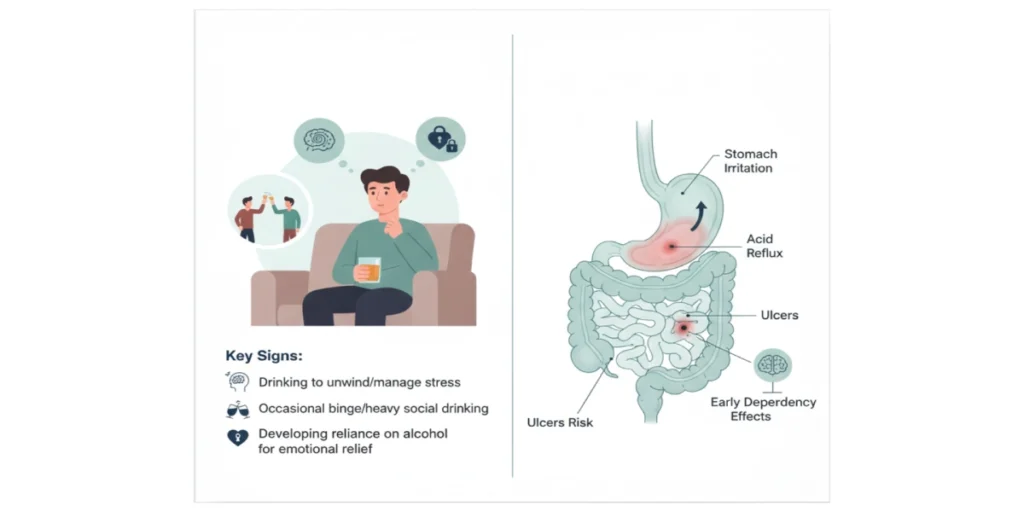
The pre-alcoholic stage marks the start of alcohol addiction. At this point, drinking may seem harmless, often used to cope with stress, anxiety, or other challenges. People may drink socially or binge during special occasions. However, this is where a psychological connection with alcohol begins, and it becomes a tool for dealing with life’s difficulties.
Key Signs:
- Drinking to unwind manage stress
- Occasional binge drinking or heavy drinking in social things
- Developing a reliance on Alcohol for emotional relief
At this stage, even though physical dependences haven’t formed yet, early signs of dependency may start to appear. The digestive system might experience mild issues, like stomach irritation.
Alcohol can also raise the risk of stomach ulcers and acid reflux because it affects the stomach lining. Recognizing these early warning signs is important, as taking action early can stop the addiction from getting worse.
Stage 2: Early Alcoholic Stage
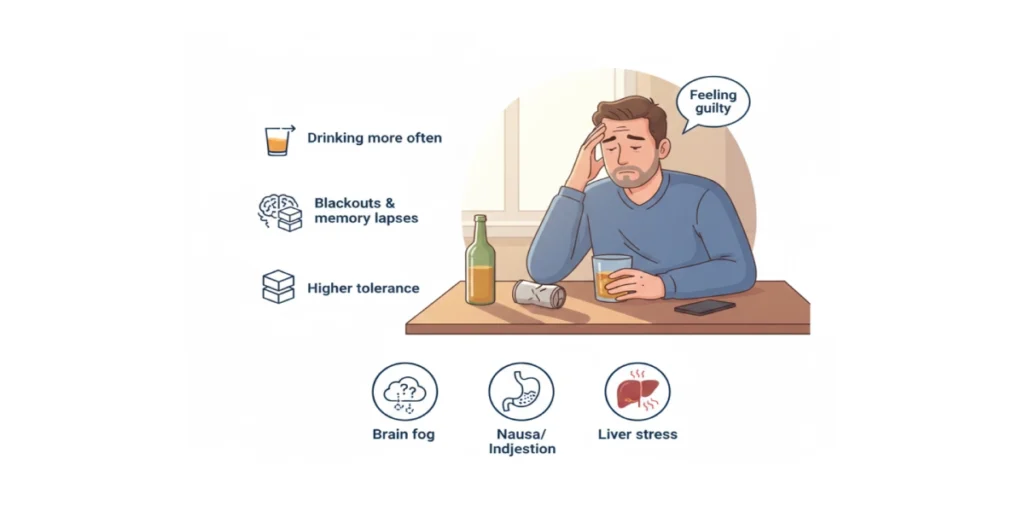
In the early alcoholic stage, alcohol consumption becomes more frequent, and signs of dependence start to show. The person may begin drinking alone and more often than before. Memory blankouts and brain fog are common, indicating that alcohol is starting to affect the brain. As tolerance increases, more alcohol is needed to achieve the same effects.
Key Signs:
- Drinking more often
- Experience blackouts or memory lapses after drinking
- Developing a higher tolerances to alcohol’
- Feeling guilty about drinking habits
The digestive system also starts to experience problems, such as nausea, vomiting, and indigestion. The liver may show signs of stress, including mild inflammation. At this stage, early intervention is crucial to prevent the addiction from advancing.
Seeking professional help, like therapy or support groups , can assist in regaining control before the drinking problem becomes more serious.
Stage 3: Middle Alcoholic Stage
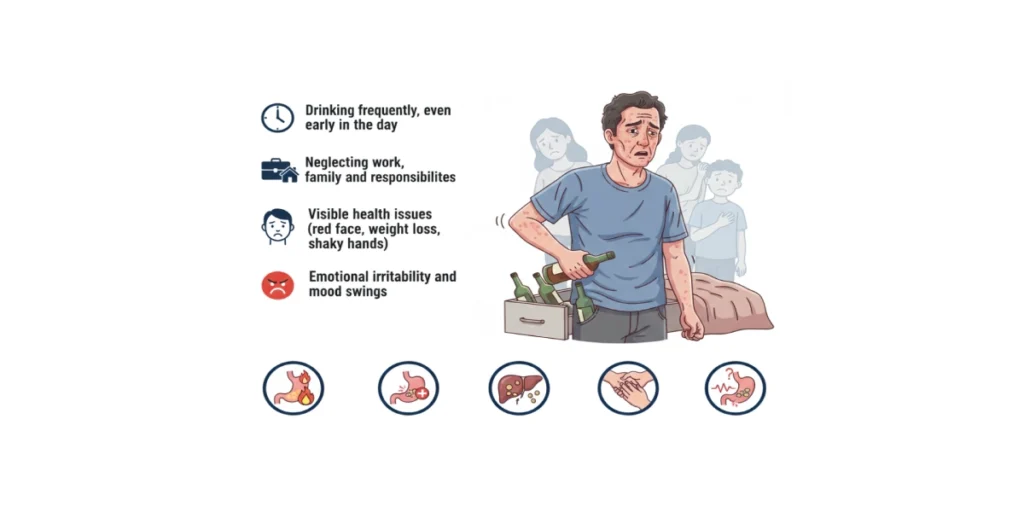
In the middle stage, alcohol use starts to affect daily responsibilities and relationships. Physical symptoms become more noticeable, such as shaking nausea and irritability when not drinking. This stage is marked by secrecy and attempts to hide drinking habits from others.
Key signs
- Drinking frequently, even early in the day
- Neglecting personal, professional, social responsibilities
- Visible health issues, such as weight changes , a red face, or shakiness
- Emotional changes, like irritability
Increased alcohol consumption puts more strain on the digestive system. The liver may develop fatty liver disease, and the person may begin experiencing chronic inflammation in stomach lining, leading to conditions like pancreatitis.
The risk of serious health problems, including liver disease and pancreatic cancers, grows significantly. At this stage , seeking professional help is crucial to prevent long-term damage.
Late Alcoholic Stage: The Most Severe Form of Alcohol Addiction
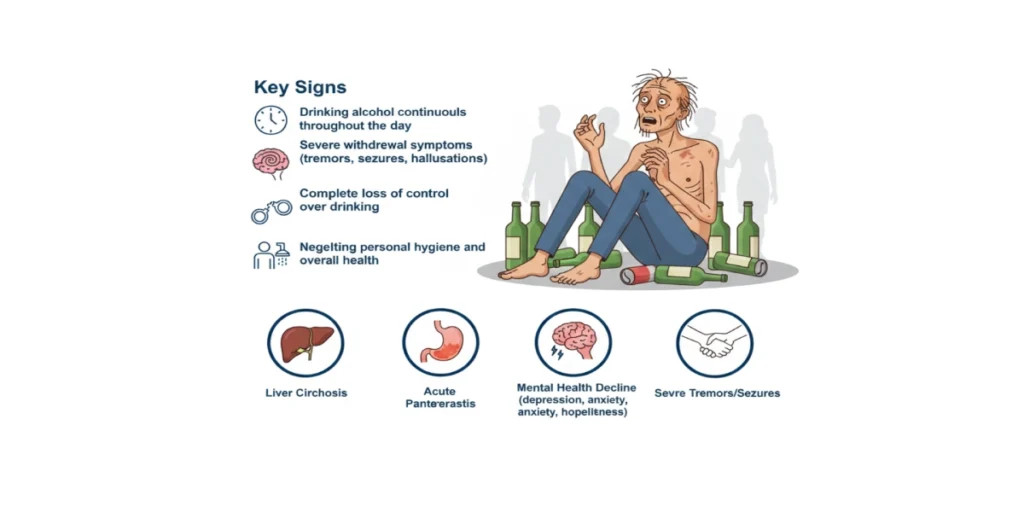
The late alcoholic stage is the most advanced and severe form of alcohol addiction. At this stage, alcohol is needed to prevent- threatening withdrawal symptoms. The body becomes physically dependent on alcohol, leading to serious health issues like cirrhosis of the liver and acute pancreatitis.
Key Signs of the Late Alcoholic Stage:
- Drinking alcohol continuously throughout the day
- Experiencing severe withdrawal symptoms such as tremors, seizures, or hallucinations
- Losing complete control over alcohol consumption
- Neglecting personal hygiene and overall health
As alcohol dependency progresses, the individual’s mental and emotional health deteriorates. Common symptoms include depression , anxiety, and suicidal thoughts. Social and financial consequences are severe, with broken relationships and job loss becoming widespread.
At this stage, seeking professional treatment is critical. Recovery remains possible, but it requires immediate medical intervention and long-term therapeutic care. Early professional help can prevent further damage and improve the chances of recovery.
Why It’s Important to Recognize the Stages of Alcohol Addiction
Recognition of the stages of alcohol addiction is crucial for early intervention. The sooner the signs are identified, the easier it is to address the issue before it becomes severe. Viewing alcoholism as a disease, not a moral failing , helps reduce stigma and encourages individuals to seek help.
Benefits of Early Recognition:
- Prevents physical and emotional damages from excessive alcohol use.
- Reduces the risk of serious health problems like liver disease, pancreatitis, and stomach ulcers.
- Provides the opportunity for recovery before reaching the severe stages of addiction.
Available Treatment Options for Alcohol Addiction
Treatment for alcohol depends on the stage of the addiction. In the early stages counselling support groups. And lifestyle changes may be enough to manage alcohol use. In the middle and late stages, detoxification and rehabilitation become necessary.
Medication- assisted treatment and therapy help individuals manage cravings, triggers, and the psychological aspects of addiction.
Common Treatment Methods:
- Therapy and counselling to address emotional triggers
- Medication to manage withdrawal symptoms and prevent relapse
- Inpatient or outpatient rehabilitation for long-term recovery
- Support groups and aftercare programs for ongoing support
Alcohol Addiction Recovery from Clear Mind Sobriety
At Clear Mind Sobriety, we understand the struggles of alcohol addiction and provide complete recovery services to support you at every stage. Whether you’re just starting to face alcohol misuse or dealing with severe dependencies, we customize our approach to fit your needs. Our evidence-based programs help you regain control, improve your health, and achieve long-term recovery.
Recovery is possible, no matter where you are on your journey. We offer personalised support, including sober coaching, therapy, and relapse prevention. We’re dedicated to giving you the tools and encouragement you need to live a life free from alcohol.
Start your recovery today with Clear Mind Sobriety. Take a first step toward a healthier, more fulfilling life by reaching out for help. It’s never too late to take control and live your best life, free from alcohol addiction.
Frequently Asked Question
1. Can alcohol addiction be cured?
Alcohol addiction is treatable, but not curable. With proper treatment , including therapy, support groups , and medication, individuals can manage their addiction and lead a sober fulfilling life.
2. How long does it take to recover from alcohol addiction?
The recovery timeline varies based on the individual and the severity of their addictions. It can take several months to year, but long-term recovery is achievable with consistent treatment and support
3. What are the first signs of alcohol addiction?
Early signs include drinking more frequently than intended, blackouts, hiding alcohol use and feeling guilty about drinking. If these behaviours are noticed, it’s important to seek help right away.